
Jonathan Anderson’s Dior FW26 Is a Poetic Collision of Heritage and Subversion

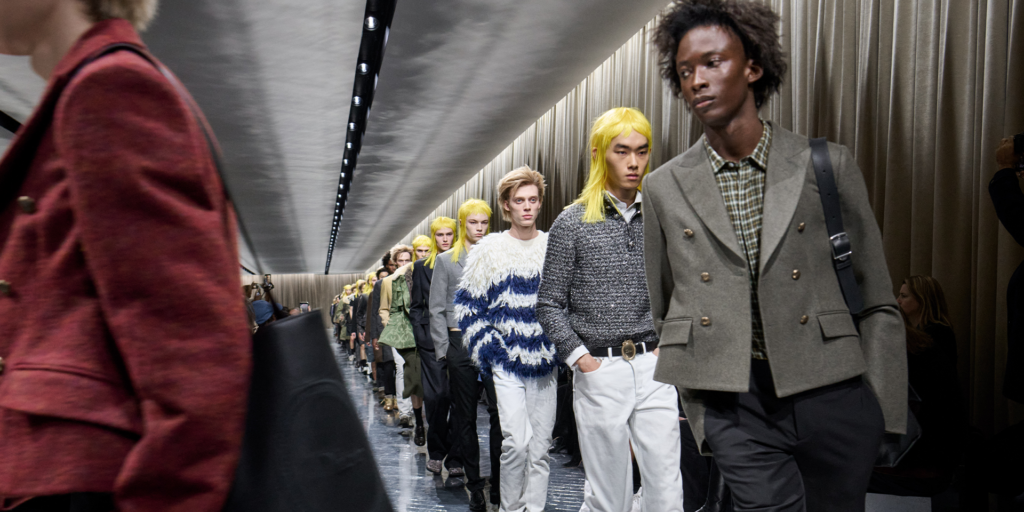
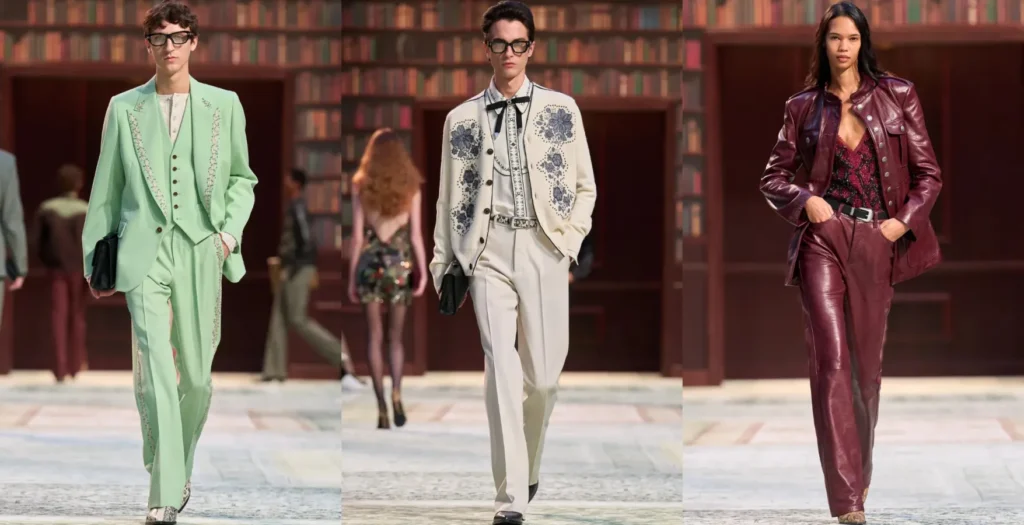
For his second menswear collection at Dior, Jonathan Anderson continues to redefine what the modern Dior man looks like, this time casting him as a contemporary Parisian flâneur, suspended between aristocratic legacy and restless youth culture. The Fall/Winter 2026 collection unfolds as a study in contrasts, where mid century couture codes collide with fluid opulence inspired by legendary couturier Paul Poiret.
The narrative begins in Paris, imagined through the eyes of an “aristo-youth” a new generation wandering the city with inherited refinement and rebellious curiosity. Their journey leads symbolically to Avenue Montaigne, where a commemorative plaque honoring Poiret becomes the conceptual spark for the collection. From this encounter, Anderson weaves together Dior’s architectural rigor with Poiret’s radical, globally infused vision of dress, luxurious, indulgent, and defiantly unrestrained.
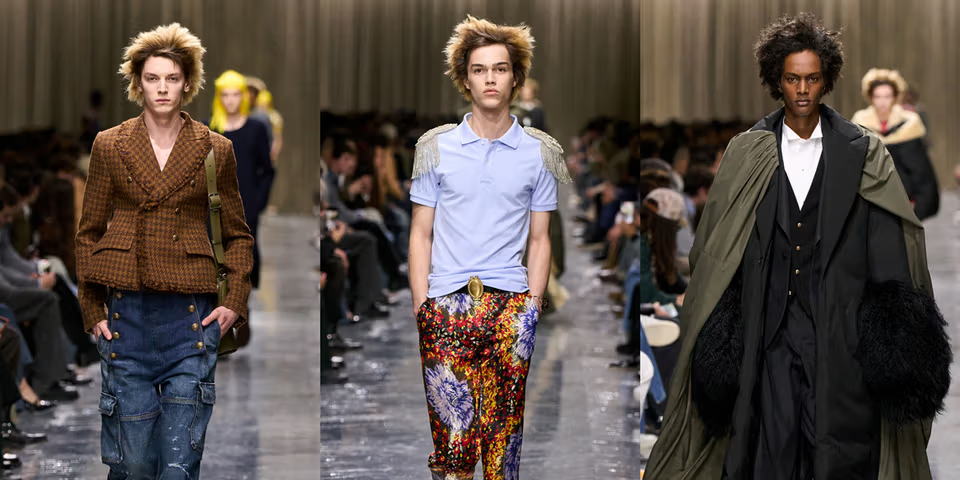
Silhouettes this season play provocatively with scale, proportion, and gendered conventions. The iconic Bar jacketappears radically slimmed down and cropped, while elongated tailcoats are styled with unexpected elements: long johns worn as trousers, delicate lavallière shirts paired with utilitarian layers. The result is a wardrobe that feels both fragile and commanding, formal yet deliberately undone.
Set against a moody, atmospheric soundtrack by Mk.gee, the show leans into an uneasy elegance. Models emerge with spiked hair and stark yellow wigs, visual signals of disruption, hovering between the stiffness of tradition and a distorted vision of the future. Anderson treats tailoring not as a fixed code, but as a living conversation. Razor-sharp blazers and shrunken jackets are offset by raw denim, parkas, and technical bombers, deliberately blurring the line between refinement and practicality, masculinity and femininity.
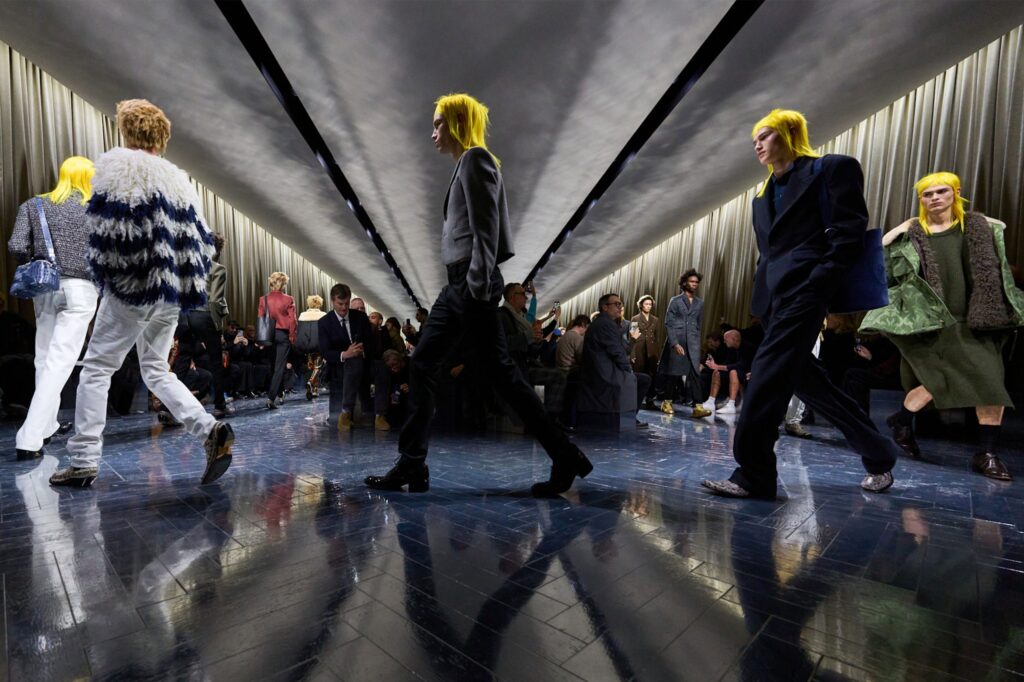
This collection is deeply rooted in character study. Anderson has spoken about an unexpected meeting with Mk.gee in Los Angeles, noting the artist’s quiet, introverted energy, an impression that subtly shaped the emotional tone of the clothes. That sensibility surfaces in cocoon-like balloon-back jackets and outerwear that transforms mid-motion: technical bombers unfurling into brocade capes, rigid structures softened into enveloping forms.
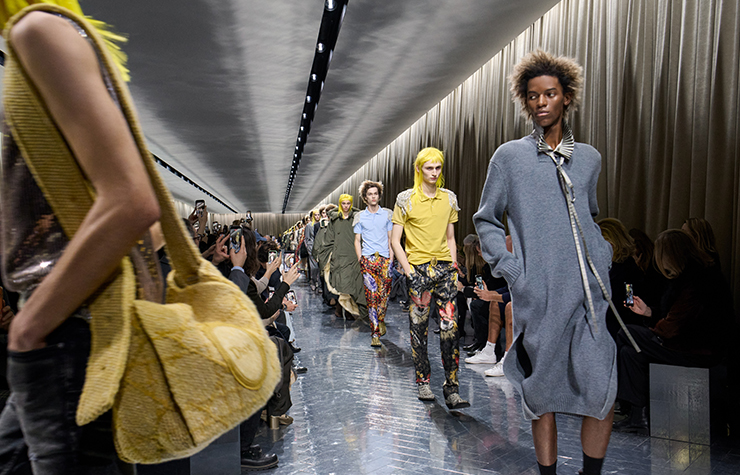
Texturally, FW26 is rich and tactile. Donegal tweeds, shimmering embroidery, and brocade capes elevate technical outerwear into something theatrical, even melancholic. Yet despite the surface-level luxury, Anderson resists traditional signifiers of wealth. Instead, he places emphasis on personal eccentricity, on style as instinct rather than status.
As Anderson himself suggests, this collection is less about aristocracy as privilege, and more about aristocracy as attitude. It asks a quiet but radical question: What does eccentricity mean when money is no longer the point? For the Dior man of today, dressing becomes an act of spontaneous association, a poetic, subversive exercise where heritage is not preserved, but continuously reimagined.
Comments, questions, feedback or collaboration? Email us at collab@digitalfashionweek.com


Responses